
Types of Scars in Breast Reduction Surgery
Scars are a normal part of breast reduction surgery, but not all scars look the same, heal the same, or mean the same thing. The final scar pattern depends on the surgical technique, the amount of breast tissue removed, skin quality, nipple position, and how the body heals.
For many people, the fear of visible scarring is one of the biggest concerns before surgery. That concern is valid. Breast reduction can bring major relief from neck pain, shoulder grooves, rashes, posture strain, and difficulty finding comfortable clothing, but it also leaves permanent marks on the skin.
The good news is that most breast reduction scars fade and flatten with time. They usually look most noticeable in the early months, then soften gradually over the first year or longer. Understanding the different scar types makes it easier to have a realistic conversation with a plastic surgeon and to know what careful aftercare can, and cannot, do.
This article is for general information only and is not a substitute for medical advice. Scar appearance and treatment should always be discussed with a qualified plastic surgeon.
Breast reduction scars usually follow predictable patterns
A breast reduction scar is the visible line left after the incision heals. In most operations, the surgeon removes extra breast tissue, fat, and skin, then reshapes the breast and repositions the nipple and areola. The skin must be closed in specific places, and those closure lines form the scar pattern.
Breast reduction scars are usually placed in areas that are less visible in normal clothing and bras. Common scar locations include:
Around the edge of the areola
From the areola down to the breast crease
Along the natural fold under the breast
The final scar pattern is not chosen only for appearance. It also has to give the surgeon enough access to reshape the breast safely. A very small reduction may need fewer incisions. A larger reduction, or significant sagging, often needs a longer scar pattern to remove enough skin and create a stable shape.
It helps to separate two ideas:
Scar pattern
This means where the incision lines are placed.
Scar behaviour
This means how the scar heals, such as flat, raised, dark, pale, wide, tight, or itchy.
Both matter. A short scar can still heal thick or dark. A longer scar can heal as a fine, pale line.
The main types of breast reduction scar patterns
Most breast reduction scars fall into a few standard patterns. Surgeons may use different names, but the basic shapes are widely recognised.
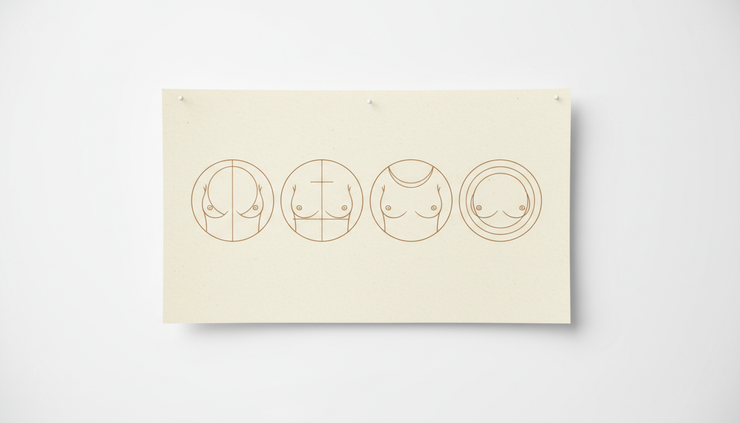
The anchor scar creates an inverted T shape
The anchor scar, also called an inverted T scar, is one of the most common scar patterns in breast reduction surgery. It includes three incision lines:
A circular scar around the areola
A vertical scar from the areola to the breast crease
A horizontal scar along the fold under the breast
This pattern resembles an anchor or an upside-down T.
Surgeons often use the anchor technique for moderate to large reductions, especially when there is significant sagging or extra skin. It gives the surgeon more control over breast shape and nipple position.
The most visible part is usually the vertical scar, especially in the early healing phase. The scar along the breast crease is often hidden by the natural fold of the breast. The areola scar may blend well over time because it sits where darker areolar skin meets surrounding breast skin.
The trade-off is clear. The anchor scar is longer, but it allows more reshaping. For many patients, the improved comfort and breast proportion outweigh the scar length.
The lollipop scar runs around the areola and down the breast
The lollipop scar, also called a vertical scar, includes:
A circular scar around the areola
A vertical scar from the areola to the lower breast
It does not usually include the long horizontal scar under the breast.
This technique may suit mild to moderate reductions where the surgeon does not need to remove a large amount of excess skin from the lower breast. The scar pattern is shorter than the anchor pattern, which is why it appeals to many people.
The vertical line can look puckered or gathered in the first few weeks. This often improves as swelling settles and the skin relaxes. In some cases, the lower breast shape takes several months to settle fully.
The lollipop pattern is a good example of why “less scar” is not always the only goal. If the breast needs more skin removal than this technique allows, choosing a shorter scar may compromise shape.

The donut scar stays around the areola
The donut scar, also called a periareolar or circumareolar scar, runs only around the border of the areola. It may be used in very small reductions or mild lifting procedures.
Because the scar sits at the edge of the areola, it can be less obvious once healed. The colour change between areola and breast skin helps disguise the line.
This approach has limits. It usually does not remove enough skin for larger reductions. It may also place tension around the areola, which can sometimes cause widening, flattening, or changes in areola shape.
For this reason, the donut scar is not the standard choice for many breast reduction cases. It is more suitable when only a small amount of tissue and skin needs adjustment.
A short-scar breast reduction may reduce scar length
Some surgeons use the term short-scar breast reduction for techniques that avoid the long horizontal scar under the breast. This often overlaps with the lollipop method.
The goal is to reduce visible scarring while still improving breast size and shape. It can work well in selected cases, but it is not suitable for every breast size or skin type.
A short scar that is under too much tension may widen. A longer scar placed with less tension may heal better. This is why the best scar pattern is not always the shortest one.
Free nipple graft scars may be used in special cases
In some very large reductions, the nipple and areola may need to be removed and grafted into a new position. This is called a free nipple graft. It is less common than standard reduction techniques and is usually reserved for specific cases.
The scar may still follow an anchor-type pattern, but the areola can also heal differently because it has been grafted. There may be changes in colour, texture, sensation, and projection.
This technique can help reduce risk in selected large reductions, but it has important trade-offs. It should be discussed carefully with the surgeon before surgery.
Scars also differ by how they heal
The incision pattern tells only part of the story. The body’s healing response determines whether the scar becomes fine and flat or more noticeable.
Fine flat scars are the usual goal
A fine, flat scar is smooth, narrow, and close in colour to the surrounding skin. It may start pink, red, brown, or purple, then fade slowly.
This type of healing is ideal, but it still takes patience. Scars continue changing long after the skin surface has closed.
Dark or pigmented scars can happen after inflammation
Some scars become darker than the surrounding skin. This is called post-inflammatory hyperpigmentation. It is more common in darker skin tones, which are common across India, and after irritation, friction, delayed healing, or sun exposure.
Pigmented scars often fade, but slowly. Sun protection is important because ultraviolet exposure can make dark marks last longer.
Raised scars may feel firm, itchy, or tender
A hypertrophic scar is raised but usually stays within the original incision line. It may feel firm, thick, itchy, or sensitive. These scars can improve over time, especially with proper scar care.
A keloid scar grows beyond the original wound edges. Keloids are less predictable and can continue to thicken. Some people have a personal or family tendency to form keloids, especially on areas such as the chest, shoulders, upper arms, and ears.
Anyone with a history of keloids should tell the surgeon before breast reduction surgery. It may affect planning and aftercare.
Widened scars form when the skin heals under tension
A widened scar is flat but broader than expected. It can happen when the healing incision is under pulling force, when support is poor, or when wound healing is delayed.
Breast reduction incisions sit on moving tissue. Stretching, heavy lifting too early, and not wearing the recommended support garment can increase tension. That does not mean widening is always preventable, but careful healing habits can reduce risk.

How breast reduction scars change over time
Scar healing moves in stages. The exact timeline varies, but the changes are usually gradual.
During the first few weeks, incision lines may look red, pink, brown, or darker than expected. There may be swelling, bruising, firmness, or mild itching. The priority at this stage is wound healing, not scar fading.
Over the next few months, scars often become firmer before they soften. This can worry people, but a temporary thick or tight phase is common. The breasts also continue settling into shape.
Between several months and a year, scars usually start to flatten and fade. Some continue improving beyond one year. Final scar maturity can take longer, especially in people prone to pigmentation or raised scars.
A scar that looks noticeable at three months may look very different later. That said, sudden redness, increasing pain, discharge, wound opening, fever, or one-sided swelling should be checked promptly.
What affects the final appearance of scars
No surgeon can promise invisible scars. Several factors influence the result.
Surgical technique matters because careful incision placement, gentle tissue handling, and low-tension closure support better healing.
Skin type and genetics play a major role. Some people naturally form fine scars. Others are more prone to thick, dark, or raised scars.
Breast size and reduction amount affect the incision pattern. Larger reductions often need longer scars because more skin must be removed.
Aftercare influences healing. Keeping follow-up appointments, wearing the advised support bra, and avoiding strain during recovery all help.
Lifestyle factors also matter. Smoking and nicotine use can reduce blood flow and affect wound healing. Poor nutrition, uncontrolled diabetes, and infection can also worsen scarring.
Scar care after breast reduction surgery
Scar care should begin only when the surgeon says the incision has closed and healed enough. Starting products too early can irritate the wound.
Common scar care measures may include:
Keeping incisions clean and dry as instructed
Wearing the recommended support bra
Avoiding heavy lifting until cleared
Using silicone gel or silicone sheets after approval
Protecting scars from sun exposure
Avoiding scratching, rubbing, and harsh skincare on healing skin
Attending scheduled follow-ups
Silicone products are commonly recommended for scar management. They may help flatten and soften some scars when used consistently. They are not magic, and they do not erase scars, but they can support better scar texture in many cases.
Scar massage may be suggested once the incision is fully healed. It should not be done over open wounds, scabs, or irritated skin. The timing and technique should come from the treating surgeon.
If scars become raised, painful, very itchy, or continue thickening, a doctor may suggest treatments such as silicone therapy, steroid injections, laser treatment, microneedling, or scar revision. The right option depends on the scar type and stage of healing.

How to discuss scarring with a surgeon
A good consultation should include a direct conversation about scars. Ask where the scars are likely to sit, which pattern suits the reduction, and how scars tend to look at different healing stages.
Useful questions include:
Which scar pattern do you recommend for this breast size and shape?
Why is that pattern better than a shorter scar option?
Where will the scars sit in relation to the areola and breast crease?
What scar problems are more likely with my skin type?
When can silicone gel, sheets, or massage begin?
What should I do if a scar becomes raised or painful?
Can I see examples of healed scars from similar reductions?
Photos can help set expectations, but they are not guarantees. Lighting, skin tone, reduction size, and healing habits all affect the final look.
It is also reasonable to ask about revision policies, though scar revision is usually considered only after the scar has matured. Operating too early can sometimes make scarring worse.
The most visible scar is not always the most important one
Many people focus on the vertical scar because it is easiest to see when looking in the mirror. The horizontal scar under the breast may be longer, but it often sits in the fold and becomes less noticeable in daily life.
The areola scar can blend well, but if it widens or heals with colour contrast, it may draw attention. In darker skin tones, pigment change may matter as much as scar thickness.
Comfort also matters. A scar that feels tight, itchy, or painful can be more bothersome than one that is visible but soft. Scar care should aim for both appearance and comfort.
The takeaway on breast reduction scars
The main types of scars in breast reduction surgery are anchor, lollipop, donut, short-scar, and, in selected cases, free nipple graft patterns. Each has a purpose. Longer scars often allow more reshaping, while shorter scars may work for smaller reductions with less excess skin.
The best scar pattern is the one that balances safe surgery, good breast shape, reliable healing, and realistic cosmetic goals. Scars are permanent, but they usually fade and soften with time. Careful surgical planning, patient aftercare, and early attention to problem scars can make a meaningful difference.
A clear discussion before surgery is the best starting point. Ask what scar pattern fits the body, what healing may look like, and what support is available if scars become raised, dark, wide, or uncomfortable.


Comments